A PPF plotter cutter and a standard vinyl cutter share the same basic mechanism — a blade guided by motion control across roll-fed material — but they are not interchangeable for every job. A PPF plotter cutter is purpose-built for thicker, self-healing TPU paint protection film and window tint, with higher cutting force, static-elimination systems, and long-length tracking accuracy that standard vinyl cutters lack. A general-purpose vinyl cutter is the more economical choice for thinner adhesive vinyl, decals, and signage graphics where film thickness and static buildup are not a concern. Shops that serve automotive wrap, tint, and PPF customers need the higher-spec machine; sign shops and label producers working mainly with standard vinyl can operate efficiently on a general vinyl cutter plotter without paying for capability they won't use.
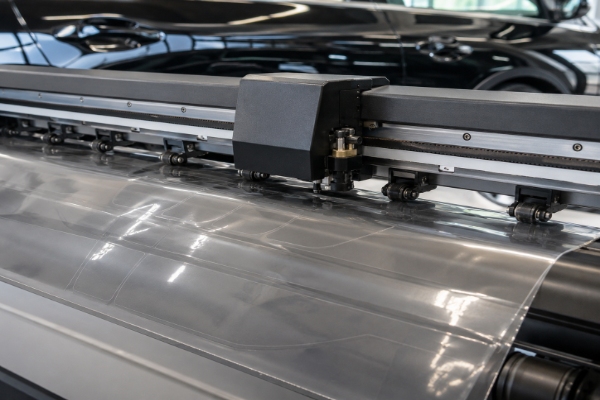
What Is a PPF Plotter Cutter?
A PPF plotter cutter is a roll-fed cutting plotter engineered specifically to handle paint protection film — a thick, self-healing thermoplastic polyurethane (TPU) material — along with window tint and other automotive-grade films. Because TPU film is denser and more elastic than standard vinyl, a PPF cutting plotter needs meaningfully higher cutting force, a more rigid blade carriage, and precise depth control to score the film without cutting through the backing liner.
Static buildup is also a bigger issue with PPF and tint film than with ordinary vinyl, since static electricity causes film to cling, misfeed, or attract dust during installation. For this reason, dedicated PPF plotter cutters typically include anti-static systems, along with long-length tracking accuracy over 20–50 feet of continuous film — a specification that matters for full-vehicle wrap and hood-length PPF patterns where even small tracking drift compounds over distance.
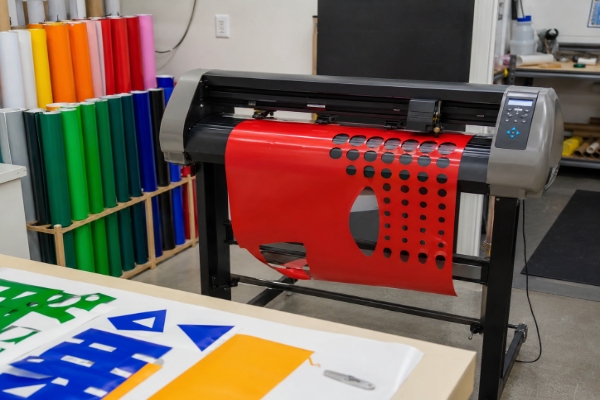
What Is a Vinyl Cutter?
A vinyl cutter is a general-purpose cutting plotter designed to cut adhesive-backed vinyl into shapes, letters, and graphics for signage, decals, labels, and light wrap work. It uses the same core principle as a PPF plotter — a moving blade guided by digital vector paths — but is typically built with lower maximum cutting force and without the specialized anti-static or heavy-film tracking systems that PPF work requires.
For sign shops, promotional product makers, and small label producers, a standard vinyl cutter is often the more practical investment: it costs less, handles the majority of everyday vinyl and card-stock jobs well, and does not require the extra torque or static control that thicker automotive films demand.
PPF Plotter Cutter vs Vinyl Cutter: Key Differences
| Comparison Factor | PPF Plotter Cutter | Vinyl Cutter |
|---|
| Target material | TPU paint protection film, window tint | Adhesive vinyl, decal & sign film |
| Typical film thickness | Thicker, denser TPU film | Thinner standard vinyl |
| Cutting force needed | Higher, adjustable in fine increments | Moderate, sufficient for thin vinyl |
| Static elimination | Built-in anti-static system standard | Usually not included |
| Long-length tracking | Optimized for 20–50 ft continuous rolls | Adequate for shorter, general-purpose runs |
| Registration system | CCD/optical registration common | Optional or basic on entry models |
| Typical buyer | Auto wrap, tint, and PPF installation shops | Sign shops, decal and label producers |
| Relative investment | Higher upfront cost | Lower upfront cost |
Which Shops Need a PPF Cutting Plotter vs a Standard Vinyl Cutter?
The right choice comes down to what materials your shop actually processes on a weekly basis, not which machine has the longer spec sheet:
Automotive PPF and tint installers need a dedicated PPF cutting plotter with high cutting force and anti-static handling — a standard vinyl cutter is likely to misfeed or fail to fully score thick TPU film, leading to torn film and wasted material.
Wrap shops handling both PPF and cast vinyl wraps benefit from a servo-driven PPF and vinyl cutting plotter that covers both material categories in one machine, avoiding the cost of two separate cutters.
Sign shops and decal producers working primarily with adhesive vinyl, reflective film, and card stock are well served by a general-purpose vinyl cutter plotter without paying extra for PPF-specific tracking and static control.
Shops printing and cutting contour graphics — labels, decals with printed artwork — should prioritize a plotter with reliable CCD camera registration so printed marks align accurately with the cut path, regardless of whether the material is film or vinyl.
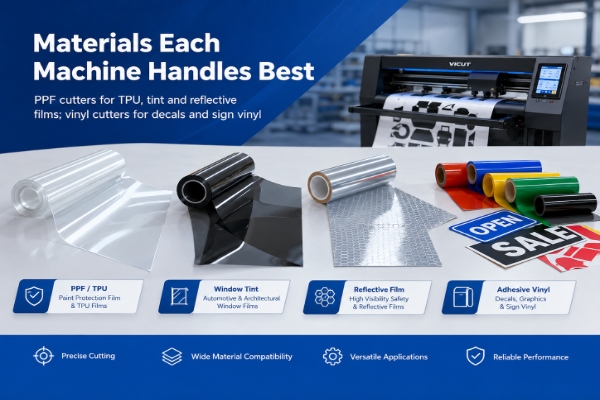
Materials Each Machine Handles Best
PPF plotter cutters are built for paint protection film, window tint, diamond-grade reflective film, and sandblast-resist rubber — materials that are thicker, denser, or more prone to static than standard sign vinyl.
Vinyl cutters are built for self-adhesive vinyl, decal film, card paper, and light signage graphics, where cutting force requirements are lower and static is rarely a production issue.
Combination cutting plotters with adjustable cutting force and anti-static features can process both categories, which is useful for shops whose material mix changes from job to job rather than staying fixed to one category.
Conclusion
Deciding between a PPF plotter cutter and a standard vinyl cutter comes down to matching machine specifications — cutting force, static control, and long-length tracking — to the materials your shop actually processes, rather than defaulting to the higher-spec or lower-cost option. Automotive PPF and tint installers generally need the dedicated higher-force machine, while sign and decal shops working mainly with standard vinyl can operate efficiently on a general-purpose cutter. For a specification comparison suited to your product mix and order volume, VICUT's team can be reached via the contact page.
FAQ
Q1:Can a standard vinyl cutter cut PPF?
Most standard vinyl cutters lack the cutting force and anti-static handling needed for TPU paint protection film. Attempting it can produce inconsistent cuts, torn film, or added strain on the machine, so a dedicated PPF plotter cutter is the safer choice for this material.
Q2:What cutting force is needed for a PPF plotter cutter?
PPF and thicker automotive films generally require higher and more finely adjustable cutting force than standard vinyl, along with depth control that can be fine-tuned in small increments to score the film without cutting the backing liner.
Q3:Is a PPF plotter cutter worth it for a shop that mostly cuts vinyl decals?
Not necessarily. If PPF and tint film make up a small share of your jobs, a general vinyl cutter plotter is usually more cost-effective. The investment in a dedicated PPF cutting plotter pays off once automotive film work becomes a meaningful part of the workload.
Q4:Do PPF plotter cutters and vinyl cutters use the same design software?
Most models support common vector formats and PPF-specific pattern libraries, but always confirm software compatibility with your existing design workflow before purchase, since some PPF pattern databases are tied to specific plotter brands.
Q5:Why is static elimination important for PPF cutting but less critical for vinyl?
PPF and window tint film are more prone to static cling than standard vinyl, which can cause misfeeds, dust attraction, and installation issues. Vinyl cutting rarely encounters the same static buildup, which is why anti-static systems are a PPF-specific feature rather than a standard vinyl cutter requirement.
 vicutcnc@cncvicut.com