Vinyl cutters and vinyl plotters are two popular tools used in crafting, sign-making, and print production. Both machines use a small blade to accurately cut or plot designs onto materials such as vinyl, paper, cardstock, and fabric. If you are unsure which machine is right for your needs, understanding their differences can help you make the right choice.
What Is a Vinyl Cutter?
A vinyl cutter is a versatile machine that uses a sharp blade to cut shapes, letters, and designs from vinyl sheets and other materials. Depending on the model, it may also work with cardstock, heat transfer vinyl, and thin wood materials.
Like a printer, a vinyl cutter connects to a computer and follows digital design files to create precise cuts. However, vinyl cutters are designed only for cutting and are not suitable for producing multi-color printed graphics.
Common Uses
Vinyl cutters are widely used by businesses and artists to create:
What Is a Vinyl Printer and Cutter (Print-and-Cut) Machine?
The term "vinyl printer and cutter" usually refers to a print-and-cut workflow rather than a single device: a wide-format printer produces a full-color design on vinyl or film, and a separate — or integrated — cutting plotter then follows registration marks to cut the printed shape out precisely.
Industrial vinyl printer setups typically pair a solvent, eco-solvent, or UV printer with a servo-driven cutting plotter equipped with optical registration. This combination is what most commercial sign shops, vehicle wrap installers, and label converters actually run, rather than a single all-in-one desktop machine.
If your business needs full-color printed graphics — not just single-color cut vinyl — a print-and-cut setup, or a vinyl plotter with integrated printing, is the right category to look at instead of a basic vinyl cutter.
What Is a Vinyl Plotter?
Vinyl plotters offer more functions than vinyl cutters because they are equipped with both a pen for drawing or printing and a blade for cutting shapes. This combination allows users to create more detailed and multi-colored graphics for different projects.
Compared with standard vinyl cutters, vinyl plotters are better suited for large-format production, including posters, banners, and promotional displays, as they can handle larger materials and higher production volumes.
Although vinyl plotters are generally more expensive, the additional cost comes from their expanded capabilities. For businesses that require both graphic plotting and precision cutting, vinyl plotters provide a more complete solution.
Common Uses
Vinyl plotters are widely used in the signage and advertising industries for producing:
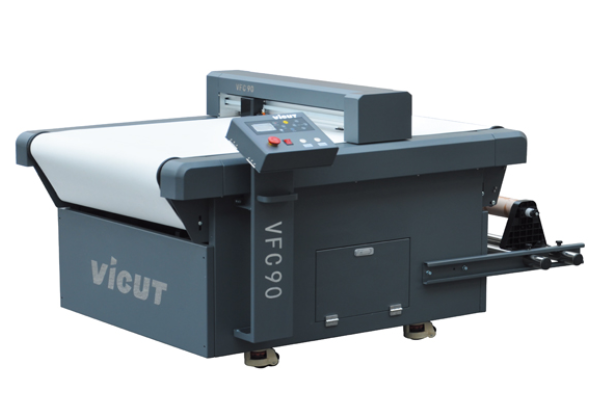
The Main Difference Between a Vinyl Cutter and a Vinyl Plotter
The biggest difference between a vinyl cutter and a vinyl plotter lies in their primary function and working tool. A vinyl cutter mainly uses a blade to cut shapes from vinyl material, while a vinyl plotter traditionally uses a pen or plotting tool to draw graphics, although many modern plotters also include cutting capabilities.
Another major difference is the scale of production. Vinyl cutters are often designed for small to medium projects such as decals, labels, heat transfer graphics, and craft applications. Vinyl plotters are generally intended for larger commercial projects requiring advanced precision, wider media handling, and integrated print-and-cut workflows.
The table below summarizes the core differences:
| Feature | Vinyl Cutter | Vinyl Plotter |
|---|
| Main Function | Cutting vinyl materials | Plotting, drawing, and cutting |
| Primary Tool | Blade | Pen, tool, or blade |
| Typical Size | Compact to medium | Medium to large |
| Main Applications | Decals, stickers, HTV | Banners, wraps, technical graphics |
| Printing Capability | Usually no | Sometimes integrated |
| User Type | Hobbyists and small businesses | Commercial and industrial users |
| Material Width | Narrow to medium | Wide-format media |
| Precision Level | High | Very high |
| Cost | Lower | Higher |
Cutting Accuracy and Precision
Both vinyl cutters and vinyl plotters offer impressive accuracy, but plotters are generally designed for higher-end precision applications. Commercial plotters often include advanced servo motors, optical alignment systems, and contour cutting technology that allow them to handle extremely detailed graphics and large-scale projects.
Vinyl cutters, especially entry-level models, are more focused on affordability and simplicity. They are ideal for standard lettering, logos, and decal production but may not provide the same level of speed or tracking accuracy for long production runs.
For businesses producing vehicle wraps or oversized signage, a vinyl plotter is often the better investment because it can maintain consistent cutting quality over large material lengths.
Software Compatibility
Both machines rely heavily on vector-based design software. Commonly used programs include Adobe Illustrator, CorelDRAW, SignMaster, FlexiSIGN, and various CAD applications. Vinyl cutters usually work with basic cutting software, while professional plotters support more advanced production workflows and RIP software integration.
Professional plotters may also support automatic registration mark detection, contour cutting, and color management systems, which are important for print-and-cut production environments.
Vinyl Cutter vs a Multi-Material Cutter: What Tradeoffs to Expect
Some cutting plotters are built to handle vinyl only, while others are rated for a wider range of materials — cardstock, thin chipboard, magnetic sheet, or heat transfer film. Before choosing a multi-material machine over a dedicated vinyl cutter, it helps to know what you're trading:
- Blade force and depth control: multi-material machines generally offer a wider adjustable force range, which is what lets them cut both thin vinyl and thicker cardstock cleanly — a vinyl-only cutter may tear or fail to fully cut denser stock.
- Cutting speed on thin vinyl: a machine optimized purely for vinyl can sometimes track and cut standard vinyl faster, since it isn't carrying the extra mechanical headroom needed for thicker materials.
- Price: multi-material capability typically adds cost, so it's only worth paying for if your job mix genuinely includes non-vinyl materials on a regular basis.
- Blade and mat consumables: thicker materials wear blades faster and may require a cutting mat or backing sheet that a vinyl-only workflow doesn't need.
If most of your work is single-color vinyl decals, a dedicated vinyl cutter is simpler and more cost-effective. If your job list already includes cardstock packaging samples, magnetic signage, or mixed-material prototypes, a wider-range multi-material cutter avoids the cost of a second machine.
Which One Should You Choose?
Choosing between a vinyl cutter and a vinyl plotter depends on your business size, production volume, budget, and application requirements.
A vinyl cutter is usually the best option if you:
· Focus on decals, stickers, or apparel graphics
· Operate a small business or home studio
· Need an affordable entry-level solution
· Mainly cut standard vinyl materials
· Produce smaller graphics
A vinyl plotter is a better choice if you:
· Produce large commercial signage
· Need advanced print-and-cut functionality
· Handle high-volume production
· Require superior tracking precision
· Work with wide-format materials
Many users entering the graphics industry start with a vinyl cutter and later upgrade to a professional vinyl plotter as their production needs grow.
Final Thoughts
Although the terms are sometimes used interchangeably, vinyl cutters and vinyl plotters are not exactly the same. A vinyl cutter is primarily designed for precision cutting of vinyl materials, while a vinyl plotter traditionally focuses on plotting, drawing, and advanced large-format graphic production. Modern vinyl plotters often combine printing and cutting functions, making them more versatile for commercial applications.
Understanding these differences helps businesses choose the right machine for their workflow, production goals, and budget. For small-scale decal making and apparel graphics, a vinyl cutter may provide everything needed. For professional sign production, vehicle wraps, and large-format graphics, a vinyl plotter offers greater functionality, precision, and scalability.
As digital printing and cutting technology continue to evolve, the distinction between vinyl cutters and vinyl plotters may become even smaller. However, knowing the strengths and limitations of each machine remains essential for maximizing productivity and achieving professional-quality results.
 vicutcnc@cncvicut.com