A roll to roll laminator is the better choice for high-volume, continuous-run jobs such as banners, wallpaper, signage, and vehicle wrap graphics, while a sheet fed laminator is the smarter pick for precision, small-format work like business cards, book covers, menus, and short-run digital prints. If your shop handles both wide-format roll media and cut-sheet jobs, many print businesses eventually run one of each — or choose a hybrid machine that supports both roll-to-roll and sheet-to-sheet feeding.
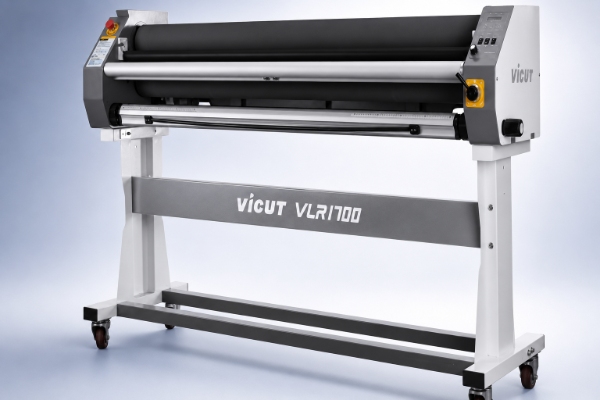
What Is a Roll to Roll Laminator?
A roll to roll laminator feeds substrate directly from a roll, laminates it continuously between heated or pressure rollers, and re-winds or cuts the finished output on the other end. Because the film and the material move through the machine in one continuous pass, roll to roll laminators are built for speed and long, unbroken runs.
This is the format used for large-format printing applications such as:
Banners, posters, and outdoor signage
Vehicle wraps and window graphics
Wallpaper and wide-format photo prints
Floor graphics and point-of-sale displays
A production-grade example is a machine like the VLR1700 large format roll laminator, which laminates and mounts signage and graphics up to 1630mm/64" wide with a pneumatic lifting system and heat-assisted top roller — designed specifically for sign shops and wide-format print providers that need continuous throughput.
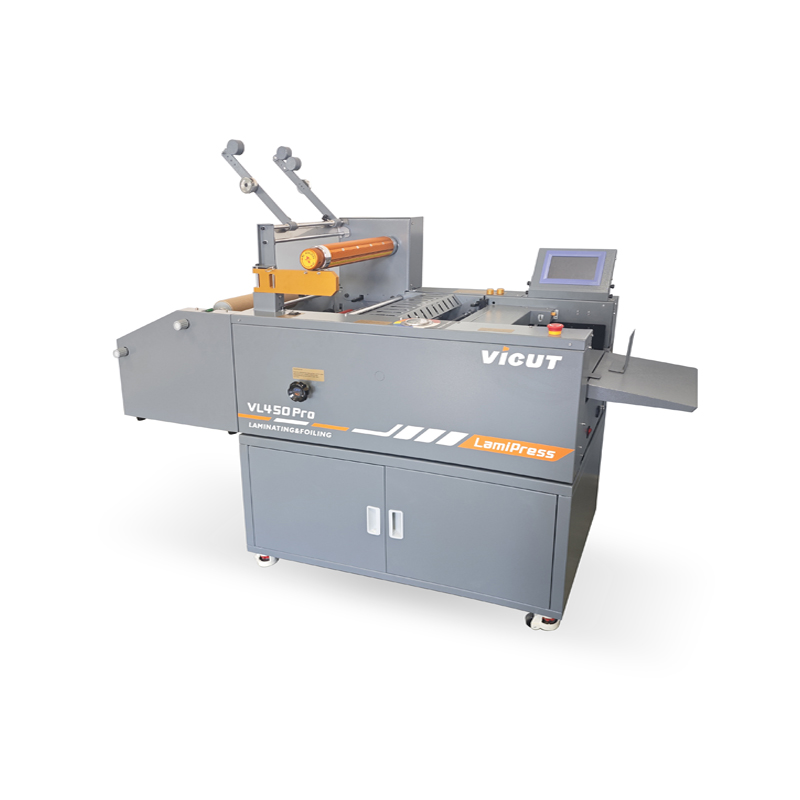
What Is a Sheet Fed Laminator?
A sheet fed laminator (also called a sheet-to-sheet laminator) processes individual, pre-cut sheets one at a time, or in an automated stack. Instead of unwinding from a roll, sheets are fed — manually or by an automatic air-suction feeder — through the laminating rollers and exit as finished, ready-to-trim pieces.
Sheet fed laminators are the standard choice for:
Business cards, postcards, and menus
Book covers and packaging inserts
Digital and lithographic print finishing
Small-to-mid batch commercial print runs
Models such as the VL-450X digital laminating and foiling machine and the higher-capacity VL-540X automatic laminating machine combine hot lamination, cold lamination, and metallic foiling in one automated system, with anti-curl technology and automatic paper-length recognition that removes manual setup between jobs.
Roll to Roll Laminator vs Sheet Fed Laminator: Key Differences
| Factor | Roll to Roll Laminator | Sheet Fed Laminator |
|---|
| Feed method | Continuous roll unwind | Individual pre-cut sheets |
| Best for | Large-format, long runs | Small/medium format, short runs |
| Typical output | Banners, wraps, wallpaper | Cards, covers, menus, packaging |
| Speed on long jobs | Very high | Moderate |
| Setup between jobs | Minimal for same media | Automatic sheet-length detection on modern models |
| Footprint | Larger, needs roll storage | Compact, space-efficient |
| Automation level | Roll feed + take-up rollers | Air-suction auto feeder, anti-curl control |
| Ideal user | Sign shops, wide-format printers | Commercial printers, copy/print shops |
| Upfront investment | Higher for wide-format units | Lower to mid-range |
When to Choose a Roll to Roll Laminator
A roll to roll laminating machine makes sense when your business fits one or more of these patterns:
1.You run continuous, high-volume jobs. Roll-fed media eliminates the stop-start of sheet loading, which matters most on long production runs.
2.Your output is wide-format. Signage, banners, and vehicle graphics are produced in roll form from the start, so laminating them the same way avoids extra trimming steps.
3.You need consistent tension control. Pneumatic lifting and adjustable roller pressure — found on machines like the VLR1700 — keep lamination even across long, heavy media.
4.Speed per job outweighs setup flexibility. Once a roll is loaded, a roll to roll laminator can run for extended periods with little operator intervention.
When to Choose a Sheet Fed Laminator
A sheet fed laminator is the right fit if:
1.Your jobs are pre-cut or short-run. Business cards, book covers, and menus are naturally sheet-based, so laminating sheet-to-sheet avoids unnecessary roll handling.
2.You need multi-finish flexibility. Machines like the VL-450X support hot lamination, cold lamination, and foiling in a single pass, which suits varied commercial print orders.
3.Space is limited. Sheet fed units generally have a smaller footprint than wide-format roll systems, which matters for shops without dedicated roll storage.
4.You value automatic setup. Automatic paper-length recognition and air-suction feeding reduce manual adjustment between different sheet sizes.
Cost and ROI Considerations
Roll to roll laminators typically carry a higher upfront cost, especially in wide-format widths, but they lower the per-unit cost on large runs because there's no per-sheet loading time. Sheet fed laminators cost less to start with and are more economical for shops whose orders vary in size and finish type from job to job. For businesses running both signage and commercial print work, it's common to operate a roll to roll machine for large-format output and a sheet fed unit for cards, covers, and packaging — rather than trying to force one machine to do both jobs well.
Roll to Roll vs Sheet Fed Laminator for Specific Industries
Sign and wide-format print shops: A roll to roll lamination machine is almost always the primary investment, since nearly all output — banners, wraps, posters — starts and ends as roll media.
Commercial and digital print shops: A sheet fed laminating machine for print shop use fits better, since most jobs (cards, menus, book covers) arrive as finished sheets from a digital or offset press.
Packaging and label converters: Often need both — roll to roll for in-line finishing and sheet fed for short-run sample or proof work.
Print shops handling mixed formats: These businesses commonly run both machine types side by side, using a roll laminator for large-format graphics and a sheet fed unit for everyday commercial jobs, rather than relying on one machine for every job type.
Conclusion
There isn't a single "better" machine between a roll to roll laminator and a sheet fed laminator — the right choice depends entirely on your output format and volume. Choose a roll to roll laminator if your business is built around wide-format, continuous-run media like signage and banners. Choose a sheet fed laminator if your work centers on pre-cut, short-to-medium run jobs like cards, covers, and packaging. Many growing print shops eventually invest in both to cover their full range of orders. Explore VICUT's full laminating and foiling equipment lineup or check the complete product catalog to find the configuration that matches your production needs.
FAQ
Q1: What power supply specifications are required for the laminating machine?
The machine requires a stable AC 220V/110V (50/60Hz) power supply with a dedicated grounded socket. Do not share the power circuit with other high-power equipment.
Q2: How to install the laminating film roll correctly?
Mount the film roll on the unwinding shaft, adjust the tension controller to keep the film taut and centered, then thread the film through the guide rollers and preheating rollers in the correct direction.
Q3: How long does the preheating process take before formal operation?
For hot laminating machines, preheat the rollers to the set temperature (90–130°C) and keep warm for 10–20 minutes to ensure even heating of the roller surface.
Q4: What materials can be laminated by this machine?
It is suitable for coated paper, photo paper, PVC sheets, vinyl stickers and etc.
Paper weight: 125gsm-400gsm
Q5: How to set the temperature, speed and pressure for lamination?
Set temperature (90–110°C for BOPP film, 100–130°C for thermal film), adjust speed to 1–5m/min, and set hydraulic pressure according to the thickness of the substrate.
 vicutcnc@cncvicut.com