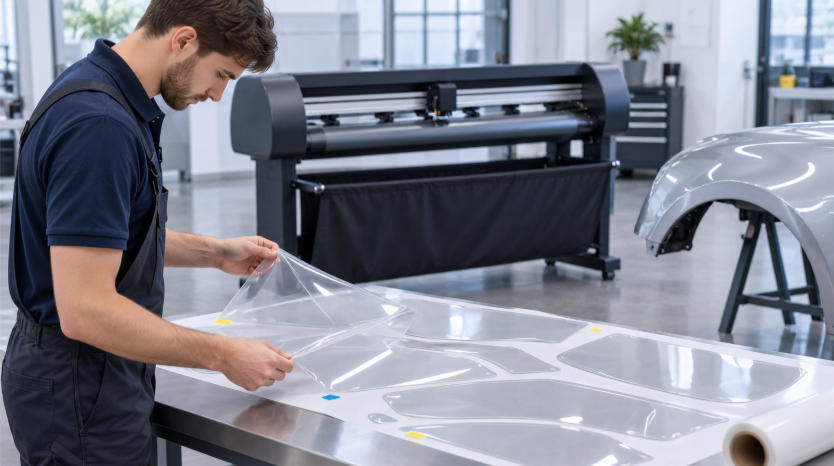
A pre-cut PPF machine cuts paint protection film from a digital pattern before the installer places the film on a vehicle. Together with suitable pattern software and skilled installation, it can make repeat jobs easier to organize and reduce the need to trim film on painted panels. It does not guarantee a perfect fit, eliminate installation skill or make every vehicle suitable for a standard template.
Key Takeaways
● Pre-cut PPF involves vehicle identification, a suitable pattern, film, a cutter and installation—not a machine acting alone.
● A plotter cuts flat film from a digital path; pattern quality, film construction and setup affect the result.
● Cutting away from the vehicle can reduce on-vehicle knife work, but pattern checks and safe installation remain essential.
● Compare pattern coverage, editing, file compatibility and licensing separately from the cutter's hardware.
● Test the actual film and a representative panel pattern before deciding whether in-house cutting fits the shop.
What Is a Pre-Cut PPF Machine?
A pre-cut PPF machine is usually a digital cutting plotter configured to follow a vehicle-panel pattern on film. The pattern may come from a separately licensed library or from an authorized custom file. The shop selects the vehicle and panels, sends approved cut paths to the plotter and prepares the resulting pieces for installation.
Paint protection film, decorative vehicle wrap and window tint are different materials and should not be treated as interchangeable. The VICUT roll feeding cutting plotter range lists PPF among its applications. Film compatibility, working width and software connection still need confirmation for the exact model and the shop's material.
From Vehicle Check to Finished Panel
| Stage | What the shop checks | Why it matters |
|---|
| Identify the vehicle | Make, model, year, trim and body changes | A close-looking pattern may not match the panel |
| Select the coverage | Panels, seams, edges and customer requirements | Pattern boundaries affect the finished appearance |
| Prepare the file | File version, scale, orientation and permitted edits | A cutter follows the supplied path, including mistakes |
| Cut the film | Roll alignment, blade setup, tracking and liner condition | Incorrect settings can damage the film or liner |
| Install and inspect | Position, coverage, edges and surface preparation | A cut piece still requires trained installation |
Before cutting a complete kit, confirm the vehicle and any aftermarket parts, repairs or trim differences. Decide whether the customer's preferred coverage is available in the selected pattern. Where the library permits editing, any edge adjustment needs an installer review: more material is not automatically better for every panel.
How Pre-Cut PPF Can Change the Shop Workflow
With an in-house plotter, a shop can prepare a pattern away from the vehicle and organize repeat jobs around a saved file. This can reduce the amount of freehand trimming required on painted surfaces. It may also help a team hand off labeled pieces from preparation to installation. The time and material outcome depend on the pattern, vehicle, operator and job mix; measure them in the shop rather than assuming a fixed saving.
Pre-cut pieces are not a substitute for inspecting the vehicle or applying the film correctly. Surface preparation, positioning, stretching, edge finishing and post-installation inspection still matter. A shop may combine a precut panel with custom work where a template is unavailable or a customer requests a different edge treatment. Follow the film manufacturer's instructions and the shop's safety procedures.
Pre-Cut Patterns vs Bulk Installation
| Decision factor | Pre-cut pattern | Bulk or custom approach |
|---|
| Initial preparation | Select and verify a suitable pattern | Measure and plan coverage on the vehicle |
| Cutting location | Usually at the plotter before placement | May involve cutting or trimming during installation |
| Coverage choices | Depend on available pattern and permitted edits | Can be adapted by the installer to the job |
| Main risks to manage | Wrong pattern, scaling, film setup or edge fit | Measurement, handling and safe trimming |
| Best comparison | Total accepted job time and material used | Same vehicle, film, coverage and quality standard |
Neither method guarantees a better finish. Pattern availability, installer experience and customer expectations determine the appropriate route. The window film cutting machine guide compares material handling, tracking and sample testing without treating tint and PPF as identical.
Check Software and Hardware Separately
Ask the pattern provider which vehicles, years and variants are covered, how revisions are delivered and what happens when a vehicle is missing. Check editing permissions, file export, the required computer or connection, licensing and recurring or per-use charges. Confirm that the pattern workflow communicates with the quoted cutter and that scale is preserved. Do not assume a pattern library is included with a VICUT machine or that a third-party package is compatible without a test.
On the hardware side, document usable cut width, roll dimensions, blade and holder, tracking, media handling and depth control. A clean test on the shop's PPF should leave the film usable and the liner in the condition required for handling. Check a long pattern as well as tight curves, narrow tabs and small details. For shops considering a different material path, VICUT roll feeding flatbed cutters are a separate category to assess against the required operations and available floor space.
Test the Business Case on Real Jobs
Compare a representative pre-cut job with the existing process on the same vehicle type, film and coverage. Time pattern selection, edits, loading, cutting, weeding, installation and corrections. Record wasted film and rejected pieces separately; document finished panel quality and customer-requested changes.
A cutter may be useful for frequent repeat work, while purchasing a pre-cut kit or using a custom approach may suit an occasional job. Equipment price is only part of the decision: include software access, training, consumables, maintenance and the space needed to handle rolls.
Frequently Asked Questions
Is pre-cut PPF applied without any knife work?
Not necessarily. A suitable pre-cut pattern can reduce trimming on painted panels, but installation details and additional trimming depend on the vehicle, pattern and shop procedure.
Does a PPF plotter include vehicle patterns?
Not always. The cutter and pattern library may be sold or licensed separately. Verify coverage, charges, file formats and compatibility before purchase.
Can a vinyl cutter cut PPF?
Some plotters can process both materials, but compatibility depends on the specific machine, blade, material construction and setup. Test the PPF and liner rather than relying on the product name.
What if the vehicle is not in the pattern library?
Ask the provider about updates, authorized custom files and permitted editing. A qualified installer may need an alternative approach for a missing or modified panel.
Plan a Film and Pattern Test
Send VICUT the actual film, roll width, a representative authorized pattern file and the intended finished output. Ask for a model-specific test and verify software compatibility with the pattern provider before committing to an in-house pre-cut workflow.
 vicutcnc@cncvicut.com